Most prohibited items in self storage units are not a mystery once you think about it, but a surprising number of people find out the hard way, we would rather you hear it from us first. . Knowing storage unit rules before you pack saves you an awkward phone call, a fine, and keeps your things (and everyone else’s) safe..
Here are the seven things that should never make it into your unit, and the simple reason behind each one
The 7 Things You Should Never Store (number 6 applies only if you were a Breaking Bad character, lol)
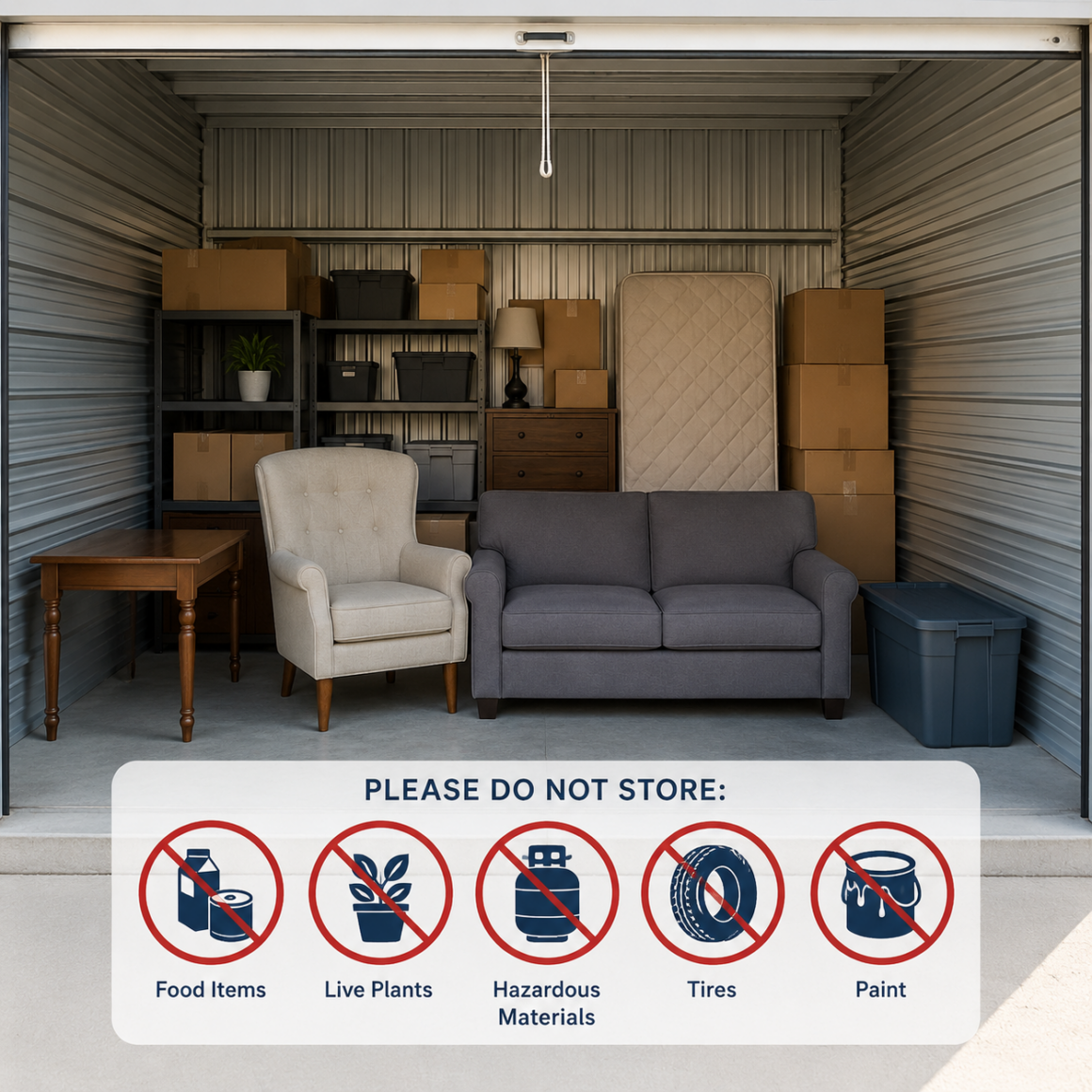
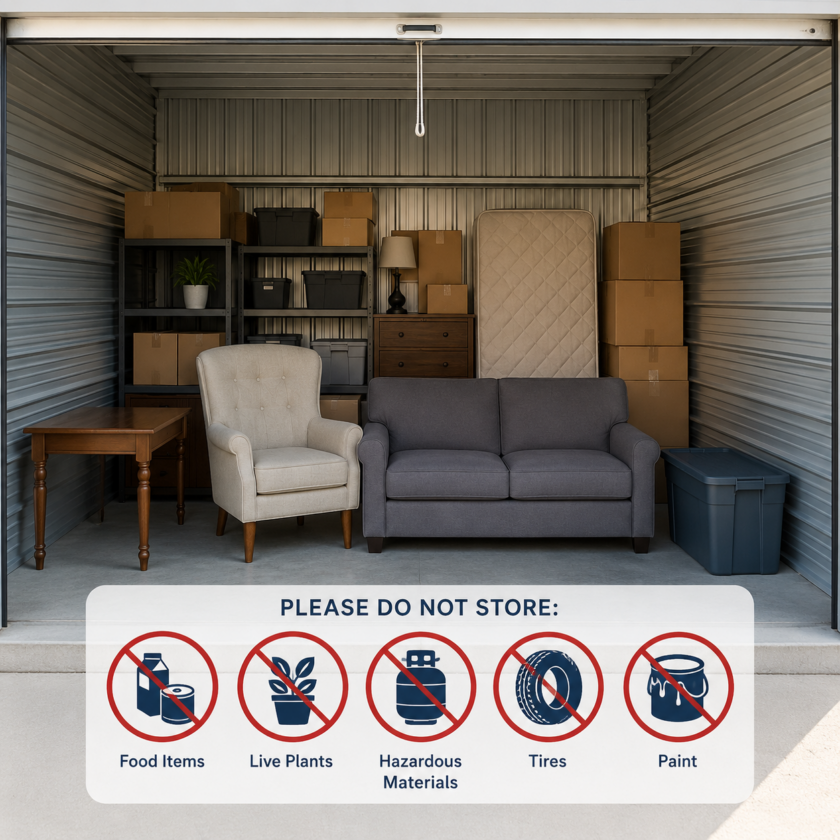
- Food and anything perishable.This is the most common mistake, and usually an accidental one. Crumbs in a couch cushion, a forgotten bag of chips in a moving box, or pet food packed alongside pet supplies can all attract rodents and insects fast. Once pests move in, the damage spreads to neighboring units too, not just yours. Clean furniture and appliances thoroughly before they go into storage, and double check pockets, cabinets, and drawers for anything edible.
- Anything flammable or hazardous.Gasoline, propane tanks, paint thinner, aerosol cans, and cleaning chemicals all pose a real fire risk in an enclosed space. Temperature swings inside a unit can cause pressure buildup in sealed containers, turning something that seemed stable into a genuine hazard. Drain fuel from lawn equipment before storingit, and dispose of chemicals through a local hazardous waste program instead.
- Live plants.Plants need sunlight, airflow, and water to survive, none of which a storage unit provides. Beyond the plant not making it, soil can harbor mold and pests that spread to everything stored nearby. If you are downsizing and cannot take a plant with you, a neighbor or family member is a far betteroption than a storage unit.
- Pets or any living creature.This shouldgo without saying, but storage units are not ventilated, temperature-regulated, or safe for any living thing, even briefly. Pet supplies like carriers, bedding, and toys are perfectly fine to store. The pet itself never is.
- Firearms, ammunition,explosivesor illegal stuff. Even licensed, responsible gun owners should not store firearms or ammunition in a standard storage unit. Temperature fluctuations can degrade ammunition over time, and the liability risk is high enough that most facility agreements explicitly prohibit it. A home safe or a licensed firearm storage facility is the safer call.
- Cash, jewelry, and irreplaceable documents.A storage unit is built to protect furniture and boxes, not to function as a bank vault. Birth certificates, passports, deeds, and cash are all better kept in a fireproof home safe or a bank safety deposit box, somewhere built specifically for that level of security.You don’t want to call Saul Goodman, do you?
- Wet or damp items.Anything stored even slightly damp, a rug, a mattress, a box that got caught in the rain during move-in, creates the exact conditions mold needs to take hold. Once mold sets in, it spreads to whatever else is nearby, and it isnearly impossible to fully reverse the damage. Make sure everything is completely dry before it goes into your unit, not just dry to the touch.
One exception worth calling out: sentimental keepsakes like old photos, letters, and heirlooms are not on this list. Those are worth keepingmaybe at home, maybe at a clean secure unit, which can be a better home for them than a basement that floods or an attic nobody checks.
The smart move is scan or photograph the originals so you always have a digital copy, then store the physical pieces somewhere safe. That way a memory is never one accident away from being gone.
What Happens If You Break the Rules
Storage unit rules are not just fine print. Facilities take them seriously, and so should you.
What happens if you store a prohibited item in your unit?
Storing a prohibited item can result in the facility requiring immediate removal, a fine, or in serious cases, lease termination and eviction from the unit. Hazardous materials in particular may prompt an immediate inspection of the entire facility. Most issues get resolved quickly if you are upfront with your facility manager the moment you realize a mistake, rather than waiting for it to be discovered.
Can I store a car battery or lawn equipment fuel in a storage unit?
No. Car batteries and any fuel, including gas left in lawn equipment like mowers or trimmers, count as hazardous materials and are not allowed in a standard storage unit. Drain fuel completely and disconnect batteries before storing equipment, or store them at home instead.
When in Doubt, Ask First
Storage unit rules exist for good reasons, mostly to keep your belongings and everyone else’s safe. If you are ever unsure whether something qualifies, a quick question to your storage advisor before move-in day is a lot easier than a conversation after the fact.
For a full walkthrough of what typically can and can’t go into a storage unit, Move.org’s guide breaks down the most common restrictions, from hazardous materials to perishables, so you know what to plan for before move-in day.